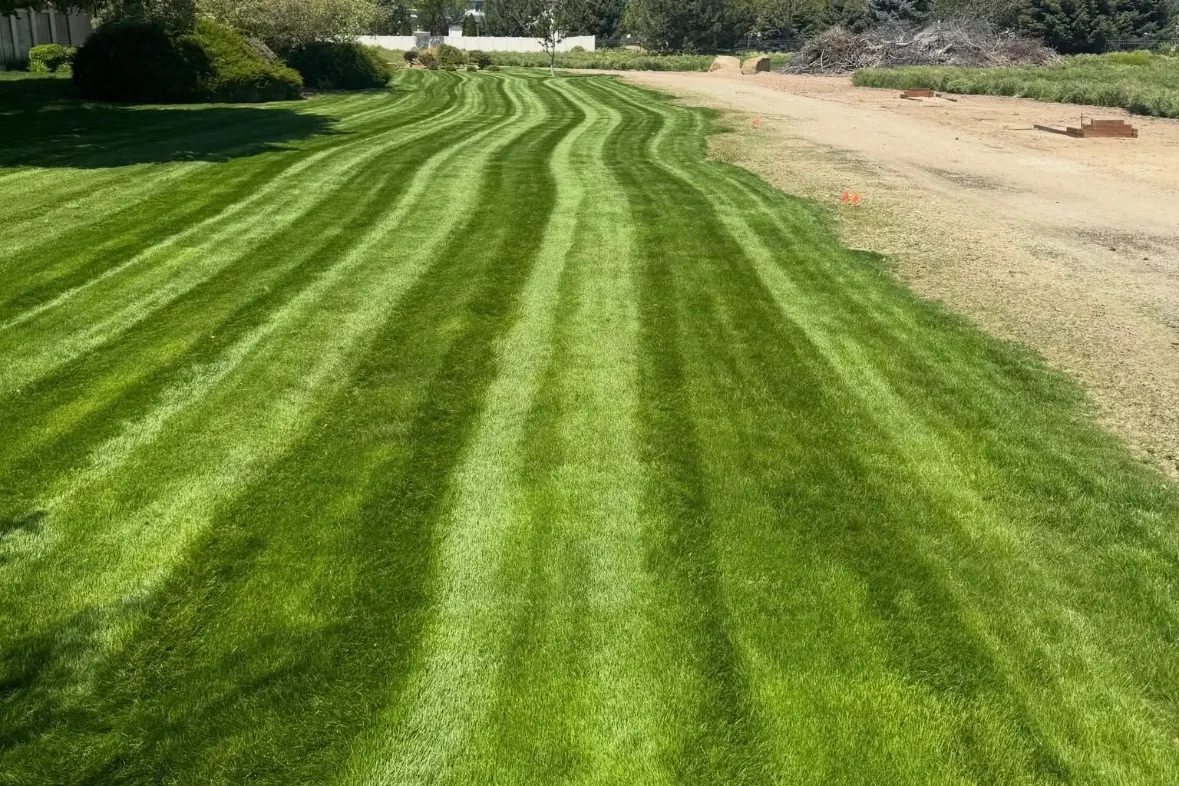
Short grass looks neat for a day. In a Treasure Valley July, it's also the fastest way to a brown lawn.
The numbers
For the Kentucky bluegrass and bluegrass blends most lawns here are planted with:
- Spring (April to early June): about 2.5 inches.
- Summer (mid-June through August): raise it to 3 to 3.5 inches.
- Fall (September onward): come back down toward 2.5 inches, with a final shorter cut before winter.
Why taller grass survives the heat
Grass blades shade the soil. Taller grass keeps the soil cooler and slows evaporation, so the water you put down lasts longer. Grass also grows roots roughly in proportion to its leaves: cut it short, and the roots stay short too, right at the surface where the soil dries out first.
Taller grass also shades out weeds. Crabgrass seeds need sunlight on the soil to germinate.
The one-third rule
Never cut off more than a third of the blade in one mow. If the lawn is at 4.5 inches and you want 3, take it down to about 3.5 first, then to 3 a few days later.
This is why weekly mowing matters in May and June, when bluegrass can grow an inch and a half in a week. Every two weeks means taking off half the blade at once, which leaves the lawn looking scalped and pale for days.
Sharp blades matter too
A dull blade tears the grass instead of cutting it. The torn tips turn brown and the lawn takes on a grey, washed-out look within a day. We sharpen ours constantly through the season.
Mulch or bag?
Mulch, most of the time. Clippings break down fast and return nitrogen to the soil — roughly one feeding's worth over a season. Bag when the grass is very long, wet, or full of seed heads in late spring.
Want it done right every week? See our weekly mowing service, or get a ballpark price.